
Picard and Thiriet occupy two distinct segments of the French frozen food market, but their differences go far beyond the taste quality of the dishes. The distribution model, geographical coverage, and pricing structure separate these two brands more clearly than one might perceive in-store. Comparing Picard and Thiriet requires looking beyond the refrigerated display.
Distribution model: Thiriet’s concession vs. Picard’s integrated network
The most structural difference between these two brands does not concern recipes or ingredients. It lies in how each organizes its presence in the territory.
Read also : Complete guide to easily and securely access the Arkevia client area
Picard operates as an integrated chain of specialized stores. Each point of sale belongs to the group, with a uniform commercial policy from one store to another. Consumers find the same prices, promotions, and catalog everywhere.
Thiriet relies on a system of renewable 5-year commercial concessions, with a fee of about 1.5% of net sales and no entry fees. The concessionaire is an independent operator who manages their area, delivery routes, and local promotional activities. This flexibility allows Thiriet to establish itself in suburban or rural areas where Picard does not open stores.
Related reading : How to choose between a paper safe and the My Arkevia app for sensitive documents?
This comparison between Picard and Thiriet makes sense when considering geographical access: depending on your place of residence, one of the two brands may be much easier to access than the other, not in-store, but via delivery.
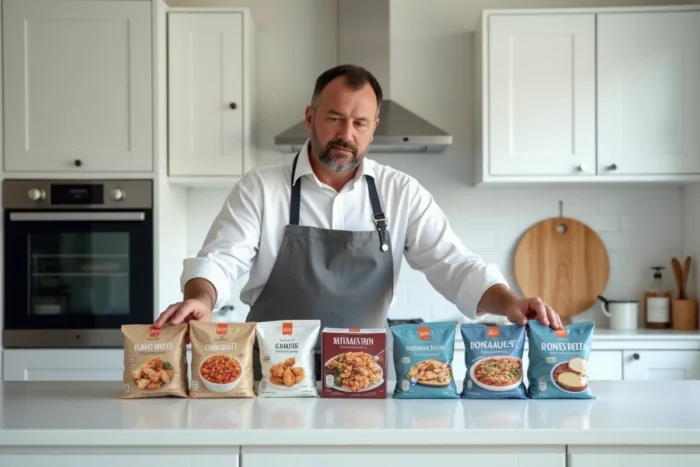
Home delivery: the channel that truly separates Picard and Thiriet
Thiriet has historically positioned itself as a specialist in home delivery of frozen foods. The model relies on regular routes managed by the local concessionaire, fostering a close relationship between the delivery person and the customer. For consumers with limited mobility or those living far from city centers, this service is a game changer.
Picard also offers delivery, but its model remains centered around the physical store. The bulk of the customer experience occurs in-store, with a pathway designed for quick checkout.
| Criterion | Picard | Thiriet |
|---|---|---|
| Main channel | Integrated physical store | Home delivery by concessionaire |
| Development model | Branch network | Independent commercial concessions |
| Fee / entry fee | Not applicable (integrated) | ~1.5% of net sales, no entry fee |
| Announced range | Large catalog renewed by season | About 1,800 sweet and savory creations |
| Geographical coverage | Strong in urban areas | Also present in suburban and rural areas |
Thiriet announces a range of about 1,800 creations in sweet and savory. Picard communicates more about the seasonal renewal of its catalog, with limited editions and recipes inspired by current culinary trends.
Raw frozen foods and vegetables: where price gaps widen
On raw products (plain vegetables, unprepared fish, fruits), the price differences between specialized brands and large retailers are documented. Que Choisir has noted pronounced differences on raw products between distribution channels.
Picard and Thiriet display prices higher than those of private label brands in supermarkets for frozen vegetables. The question then arises as to what one is really paying for:
- At Picard, the extra cost reflects varietal selection, sizing, and often individual portion packaging convenient for small households
- At Thiriet, integrated artisanal production (via its workshops Atelier Toqué and Fabrique Givrée) impacts the price of prepared dishes, but raw vegetables do not benefit from the same in-house production advantage
- In supermarkets, budget frozen vegetable bags remain significantly cheaper, with often comparable nutritional quality on unprocessed products
For regular purchases of vegetables and raw products, the choice between Picard and Thiriet is primarily justified by the convenience of packaging or the proximity of a point of sale. In terms of taste, the gap is more pronounced in prepared dishes and desserts.
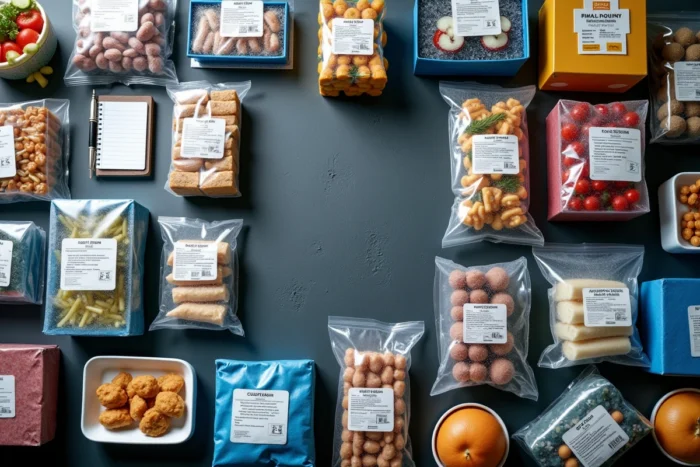
Ice creams and frozen desserts: a more readable comparison ground
Frozen desserts are the segment where Thiriet best leverages its integrated production. The ice creams made in its own workshops have shorter ingredient lists in additives than the market average.
According to a comparison reported by RMC in 2025, some Picard ice creams are among the highest rated against national brands, with fewer additives and less added sugar than mainstream references. The quality positioning is thus confirmed for both brands in this segment, with a slight manufacturing advantage for Thiriet due to direct control over the production chain.
On prepared dishes, the approach diverges significantly. Picard frequently updates its menu with recipes of international flavor. Thiriet remains more traditional, rooted in French family cuisine. The choice here depends more on personal taste than on a measurable quality gap.
The determining factor between Picard and Thiriet ultimately depends less on the contents of the plate than on the mode of purchase. An urban consumer with a Picard store nearby does not face the same constraints as a household in a rural area served by Thiriet’s routes. The logistical model, more than the recipe, guides the sustainable choice.