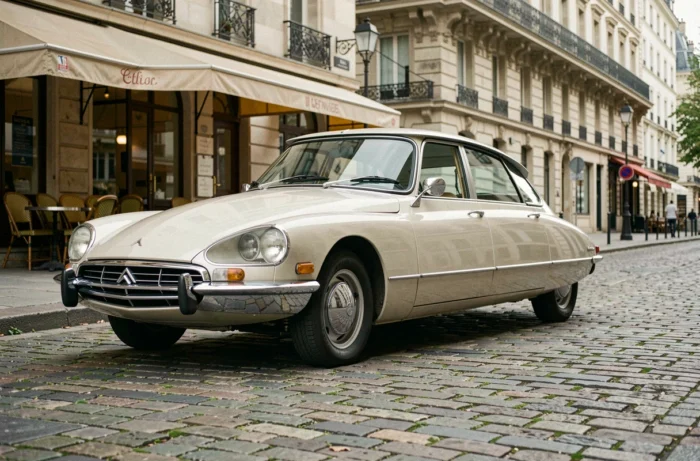
Citroën is one of those brands that you recognize even before reading the logo. The chevrons on the grille, a suspension that absorbs imperfections, a focus on comfort that hasn’t changed in over a century. Behind this identity lies a range that has evolved significantly in recent years, between electrification and new trims. Understanding where Citroën stands today helps make a more informed purchasing decision.
Collection Trims on C3, C3 Aircross, and C4: What Citroën’s Range Strategy Changes
Rather than completely renewing the design of its models, Citroën has recently focused on variants called Collection trims. In September 2026, the brand launched these versions on the C3, C3 Aircross, and C4, with additional equipment depending on the versions.
This approach deserves attention. Instead of waiting for a new model to benefit from additional equipment, the buyer can access an enhanced version of an already marketed vehicle. It’s a way to animate the range that maintains attractiveness without imposing a development cost.
For those looking for a new Citroën vehicle, checking if a Collection trim exists for the targeted model can make a difference. You can find VLR Delahaye models on Citroën Côte d’Azur to explore the available range at dealerships.
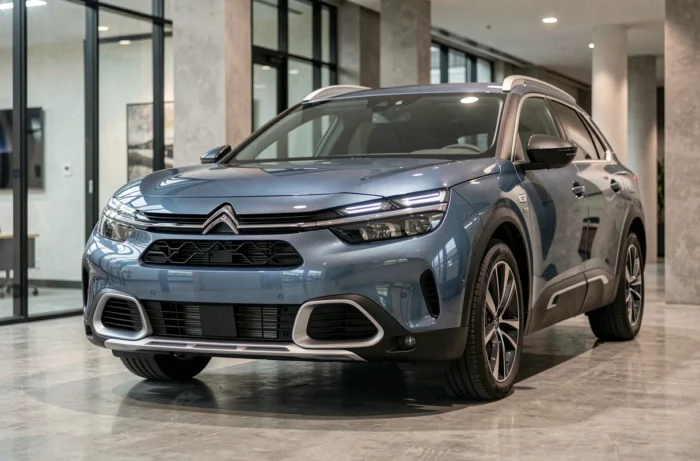
Citroën Electric: Batteries and Range of the ë-C3 Aircross
Have you noticed that entry-level electric SUVs often offer two battery sizes? Citroën made a decisive choice with the ë-C3 Aircross: the 44 kWh battery has been removed in favor of a single 54 kWh version. This decision, announced in the summer of 2026, simplifies the catalog and directs the range towards greater versatility.
In practice, this means that the buyer no longer has to choose between a low price and adequate range. The single version offers sufficient capacity for mixed journeys, positioning the ë-C3 Aircross as a family electric vehicle rather than a city car with reduced battery.
UN Regulation 100 and Homologation of Electric Vehicles
The European regulatory context also influences Citroën’s technical choices. UN Regulation 100, which governs the safety of batteries and high-voltage systems, conditions the homologation of any new electric vehicle sold in the European Union.
For the buyer, this is a guarantee of safety. Every electric Citroën model sold in Europe complies with this framework, covering protection against shocks, electrical insulation, and fire resistance of the batteries.
Comfort and Limitations: What User Feedback Says About Recent Citroëns
Users who drive Citroën daily converge on one point: the comfort of the suspension remains the brand’s main asset. Field feedback also mentions a moderate cost of use, linked to efficient engines and straightforward maintenance.
However, several limitations frequently appear in reviews:
- Road and cabin noise, perceived as higher than some competitors in the segment, especially on the highway
- The simplicity of some interior materials, which can give an entry-level impression even on mid-range trims
- The driving dynamics, considered unengaging by those seeking a sporty road behavior
These remarks do not disqualify Citroën models, but they do guide the buyer’s profile. If cabin silence is a priority, an extended test drive is essential. If comfort takes precedence over cornering stability, the brand with the chevrons remains a coherent choice.
European CO2 Targets and Their Impact on Citroën’s Catalog
The European Commission granted manufacturers a three-year extension in early 2025 to comply with CO2 emission targets. This decision, reported by the Cetelem Observatory in August 2026, reduces the immediate pressure on electric vehicle sales in 2025.
For Citroën, this means the brand can continue to market its hybrid and thermal engines without short-term penalties while gradually developing its electric range. The consumer benefits: hybrid models remain available, and electric versions gain technical maturity before becoming the norm.
Hybrid or Electric: How to Choose a Citroën Model
The choice depends on the travel profile. Here are the criteria to consider before heading to the dealership:
- Daily trips of less than fifty kilometers: an electric model like the ë-C3 Aircross easily meets the need without intermediate charging
- Regular long trips with few charging stations along the route: a hybrid engine remains more flexible to avoid range anxiety
- Tight purchase budget but a desire to reduce consumption: Collection trims on C3 or C4 in hybrid versions offer a good equipment/cost compromise
Whatever the choice, a real-world road test (not just in urban areas) allows for checking noise levels and load behavior. It’s the best way to confirm that the model fits the intended use.
Citroën is going through a transition phase where the range is structured around two axes: enriched variants on existing models and a gradual increase in electric offerings. The buyer who takes the time to compare trims and test in real conditions will find in the current range a suitable vehicle without overpaying for a superficial renewal.