
You have just purchased an apartment and you are given an extra set of keys for a storage room in the basement. You know it’s your cellar, but are you really the owner of that space? Can you do whatever you want there? The answer depends almost entirely on one document: the co-ownership regulations.
Private lot or private enjoyment: the distinction that changes everything for your cellar
Most co-owners think they own their cellar in the same way they own their apartment. In reality, two situations coexist, and they do not offer the same rights at all.
See also : Everything You Need to Know About Installment Payments at Leclerc: Guide and Tips
First case: the cellar is an annex lot attached to the main lot. It appears in your property deed with its own share of ownership. You are the full owner, just like your living room or bedroom.
Second case: the cellar remains a common area, but the co-ownership regulations grant you a right of private enjoyment. You can use it, but you do not own it. You cannot sell it separately or freely modify it.
You may also like : Everything You Need to Know About Breaking in the Yamaha XMAX 125 and Its Top Speed
To delve into the definition and utility of a cellar, you must start from this distinction: it conditions your rights regarding work, rental, and resale.
Why does this nuance matter in everyday life? Because in case of a dispute (a water damage, a cracked wall, a usage conflict), it is the legal status of the cellar that determines who pays and who decides. If the cellar is a common area with private enjoyment, it is the property manager and the general assembly that will have the final say on structural work.
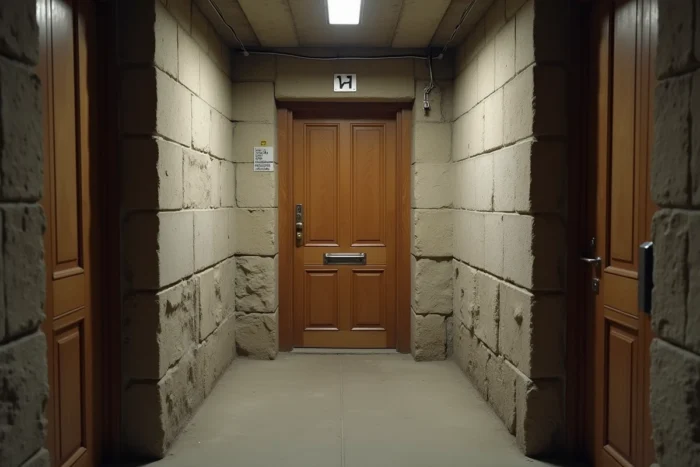
Work in co-ownership cellar: the majorities to know before starting
This is a topic that general articles often skim over, yet it regularly causes blockages in general assemblies. The rules of majority vary depending on the exact nature of your work.
- Interior work without impact on common areas (laying a floor covering, adding shelves, connecting lighting to your lot’s network): no authorization required.
- Work affecting a common area (drilling a load-bearing wall, passing through a collective pipeline, modifying the common electrical network): mandatory authorization from the general assembly by absolute majority under Article 25 of the law of July 10, 1965.
- Work modifying the exterior appearance of the building (creating a vent, visible ventilation duct on the facade): double majority under Article 26 may be required. A decision from the Rennes Court of Appeal on July 5, 2001, confirmed this principle for visible ventilation from the street.
Before launching a renovation project, also check if your co-ownership regulations impose specific restrictions. Some prohibit, for example, any additional partitioning or modification of access points.
A common trap when buying
You are buying a lot described as “apartment with cellar.” However, the division description does not always specify whether the cellar is a separate lot or just an accessory with private enjoyment. If you plan to rent or sell the cellar separately, this omission could block the entire transaction. Always ask the notary to check the descriptive state of division and the co-ownership regulations before signing.
Storage in the cellar: what the co-ownership regulations allow and prohibit
A cellar in co-ownership is not an unlimited storage space. The co-ownership regulations set a framework, and general regulations add strict prohibitions.
Flammable or hazardous products are prohibited in building cellars. Gasoline cans, gas bottles, chemicals: their presence exposes the co-owner to sanctions and incurs liability in case of fire.
Polluting materials (paints, solvents, used oils) are also banned. As for waste and bulky items, their accumulation can be sanctioned if it obstructs circulation or poses a health risk (proliferation of pests, stagnant humidity).
A questionable use: living in your cellar
Transforming a cellar into a living space is generally prohibited. For a room to be habitable, it must meet standards for surface area, ceiling height, ventilation, and natural lighting, which most cellars do not meet. Any attempt to reclassify it as housing requires urban planning authorization and, in co-ownership, a vote in the general assembly.

Rental and resale of a cellar in co-ownership: the real conditions
Renting your cellar is legally possible if it constitutes a distinct private lot. In this case, you are free to offer it to a third party (a neighbor, an external tenant) under a suitable lease. The rental yield of a cellar, especially in a dense urban area, can be interesting compared to the purchase price.
If the cellar is for private enjoyment (common area), renting to an outside third party is generally impossible without the agreement of the general assembly. The right of enjoyment is personal and attached to the main lot.
For resale, the same logic applies: a private lot can be sold freely (subject to any right of first refusal from the neighboring co-owner provided by the regulations). A right of private enjoyment, however, cannot be separated from the main lot.
Check before investing
Before buying a cellar with the intention of renting it out, three points to check:
- The exact status in the descriptive state of division (private lot or private enjoyment).
- Any usage restrictions in the co-ownership regulations (some co-ownerships prohibit renting to non-residents).
- The physical condition of the space: humidity, ventilation, access, electrical compliance. A quick diagnosis avoids unexpected renovation costs.
The cellar remains one of the few spaces in co-ownership where the boundary between the right of use and the right of ownership creates lasting misunderstandings. Rereading the co-ownership regulations and checking the descriptive state of division before any decision, whether for storage, renovation, rental, or resale, remains the most protective reflex.