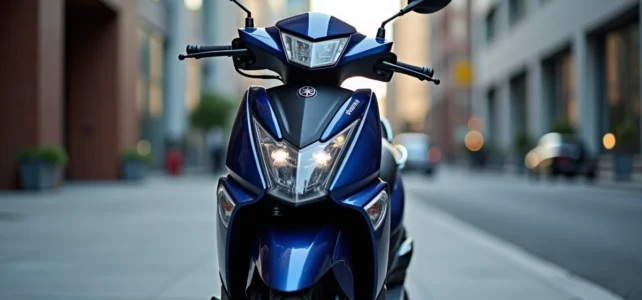
The break-in period for the Yamaha XMAX 125 corresponds to a limited operating phase during which the engine’s mechanical parts adjust to each other. This period, measured in kilometers, determines the longevity of the engine block and directly influences the maximum speed the scooter can achieve once the engine is stabilized.
Engine RPM and Break-in Stages on the XMAX 125
The break-in of the XMAX 125 relies on a gradual increase in the permitted engine RPM. The principle is simple: the engine’s usage range is intentionally limited during the first kilometers, and then it is increased in successive stages.
See also : Everything You Need to Know About the Definition, Use, and Regulations of a Cellar in Co-Ownership
For a 125 cm3 scooter, manufacturers generally recommend about 1,000 kilometers of break-in. The initial kilometers impose a reduced speed (often around 75 km/h), and each stage allows for a bit more throttle to be opened. Following these steps ensures a proper adjustment of the piston rings, cylinder, and friction surfaces.
A detailed article on the break-in of the Yamaha XMAX 125 specifies from which mileage it becomes reasonable to fully engage the engine. The key point to remember: opening the throttle too early can compromise the sealing of the rings and lead to abnormal oil consumption in the long term.
See also : Everything You Need to Know About Installment Payments at Leclerc: Guide and Tips
- Initial stage: low engine RPM, limited speed, regular RPM variations to promote the break-in of the parts
- Intermediate stage: gradual increase of the permitted speed, without maintaining a constant RPM for too long
- Final stage: gradual approach to full power, with monitoring of oil consumption and engine behavior

Maximum Speed of the XMAX 125: What the Break-in Really Changes
The maximum speed of a new XMAX 125 is not the same as that of an XMAX 125 with several thousand kilometers on the clock. During the break-in, the engine does not reach its optimal performance: internal friction remains high, and the parts are not yet perfectly adjusted.
Recent user feedback confirms that the actual top speed continues to improve beyond the theoretical 1,000 kilometers of break-in. An XMAX 125 that has surpassed 10,000 km shows better stability in cruising speed on highways and less speed loss on inclines, compared to the same scooter still in the break-in phase.
This gain is not only measured in km/h of top speed. The difference is especially felt in the consistency of the engine at high RPM and the ability to maintain a steady pace without the engine struggling. The “unlocking” of performance is therefore a gradual process, not a sudden click at 1,000 km.
Engine Oil and Mechanical Monitoring During Break-in
Oil plays a central role during the break-in of the XMAX 125. New parts generate metal microparticles as they adjust, and these residues end up in the lubricant. The manufacturer’s manual recommends an oil change after the first kilometers of break-in, well before the usual interval.
Neglecting this oil change means allowing abrasive particles to circulate in the system, which accelerates wear instead of preventing it. Regularly checking the oil level during this phase also helps detect abnormal consumption, a possible sign of improper break-in or a sealing defect.
Re-break-in After Engine Overhaul
A rarely discussed point: break-in does not only apply to new scooters. After an engine overhaul (ring replacement, reboring, cylinder replacement), specialized workshops apply a re-break-in almost identical to that of a new XMAX 125. The same RPM stages must be followed, with increased monitoring of the oil.
Buying a used XMAX 125 with a rebuilt engine means checking whether this re-break-in has been respected. An overhauled engine that is immediately pushed to its limits presents the same risks as a poorly broken-in new engine.
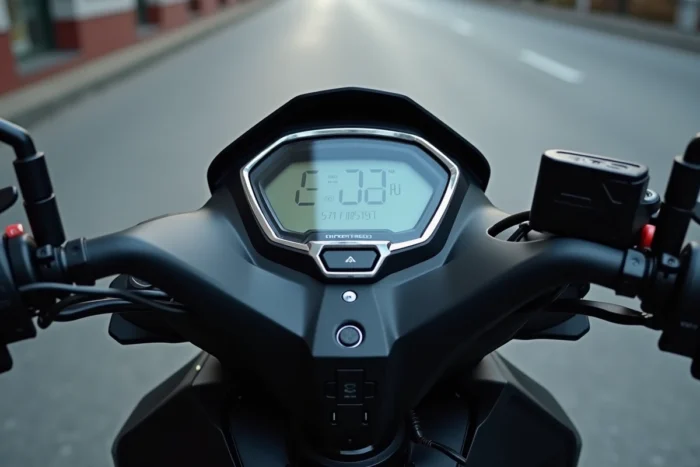
Common Mistakes That Compromise the Break-in of the XMAX 125
The temptation to push the scooter from the very first days is understandable, but two mistakes consistently appear in owner feedback.
The first: maintaining a constant RPM for long periods. On highways or fast roads, riding at a fixed speed prevents the parts from breaking in across the entire RPM range. The engine needs regular variations, including phases of engine deceleration, for the surfaces to work evenly.
The second: ignoring the engine’s signals. An XMAX 125 in break-in that vibrates abnormally, consumes too much oil, or suddenly loses power deserves a visit to the dealer before continuing to ride. Waiting until the end of the 1,000 kilometers “because the break-in isn’t finished” solves nothing if a mechanical problem is already present.
- Vary the RPM on every trip, even on short city routes
- Never hold the throttle in a fixed position for several kilometers
- Schedule the first oil change according to the manual, without postponing it
- Monitor the oil level every few hundred kilometers
The break-in of the Yamaha XMAX 125 determines its long-term performance, including its stabilized maximum speed. A properly broken-in engine, with stages respected and oil monitored, continues to gain in smoothness long after the first few thousand kilometers. The mileage at which the engine reaches its full potential far exceeds the official break-in period.