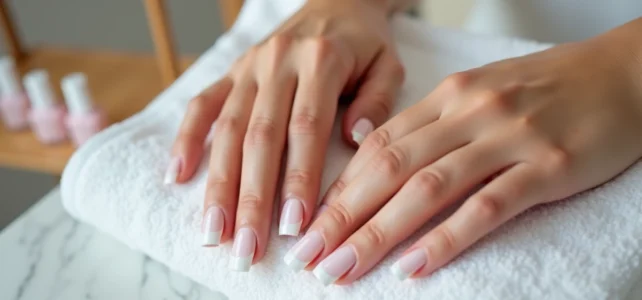
After the removal of a gel manicure, the nail plate often appears whitish, opaque, or milky. This whitening corresponds to a temporary change in the surface keratin, related to the application and removal stages of the gel. Understanding the precise mechanism allows for distinguishing a benign phenomenon from a sign that requires medical advice.
Keratin and Dehydration: The Mechanism Behind the White Nail After Gel
The nail plate is made up of stacked layers of keratin. These layers naturally contain water and lipids that give them a rosy and translucent appearance. When the gel is applied, it forms an airtight film that prevents normal moisture exchange between the plate and the environment.
Read also : Everything You Need to Know About the Definition, Use, and Regulations of a Cellar in Co-Ownership
Upon removal, the keratin becomes deeply dehydrated. The water that normally circulated between the layers has been trapped or evacuated, and light no longer passes through the plate in the same way. The visible result: a white, milky, sometimes chalky appearance.
This phenomenon is amplified by two mechanical factors. Filing the surface before application reduces the thickness of the plate, making it more porous. Soaking in acetone during removal further extracts residual lipids. The combination of the two explains why the whitening is more pronounced after several consecutive applications without a rest period. A detailed article discusses white nails after gel on Santé Boost and helps assess the severity of the phenomenon.
See also : Opportunities After a DNMADE: Studies, Careers, and Salary Prospects
Excessive Filing and Pulling: Actions That Worsen Whitening
Dehydration is not the only cause. Mechanical damage inflicted on the plate during preparation or removal plays a direct role in the appearance of persistent white areas.
Filing the Surface Before Application
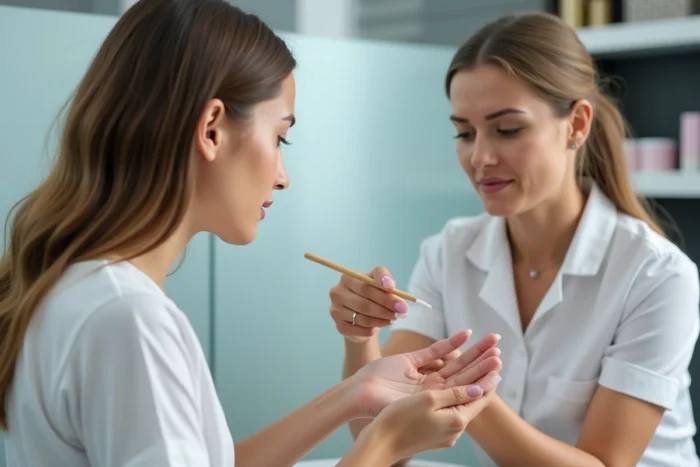
Some protocols require aggressive sanding of the natural plate to improve gel adhesion. This filing removes layers of healthy keratin and creates micro-cracks invisible to the naked eye. These cracks diffract light and produce a characteristic white veil, similar to that of a scratched glass.
A light filing, done with a fine-grit buffer, is sufficient to create the necessary grip. Aggressive sanding with an electric file is the main source of irreversible short-term mechanical damage.
Pulling Off the Gel Instead of Chemical Removal
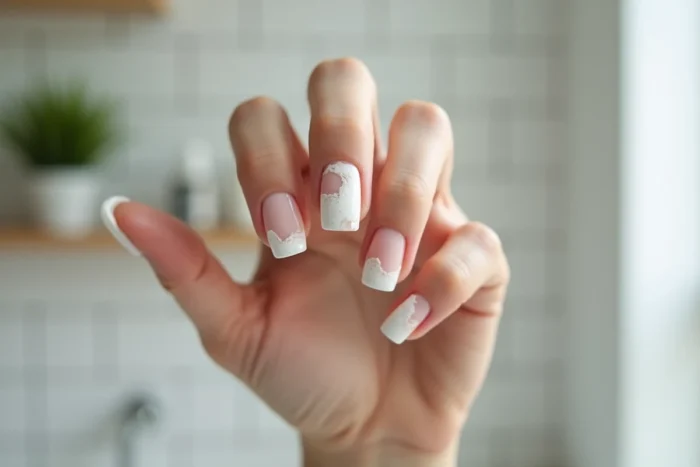
Removing the gel by peeling it off manually systematically tears away the superficial layers of the plate. The torn areas become white and rough, sometimes painful. Unlike simple dehydration, pulling damage requires several months of complete regrowth to disappear.
Gels Without HEMA or TPO: A Way to Limit White Lesions
Traditional gels contain HEMA (hydroxyethyl methacrylate) and TPO (trimethylbenzoylphosphine oxide), two components involved in allergic reactions and irritation of the nail bed. In recent years, lines formulated without these monomers have been developing in salons and professional training.
These so-called “clean” systems are of specific interest to clients who notice white, ridged, or painful nails after each application of traditional gel. The purified formulas limit overexposure to irritating substances and reduce the need for aggressive preparatory filing, as adhesion relies on different chemical mechanisms.
This does not mean that these gels are risk-free. The technique of application and removal remains the determining factor. A gel without HEMA applied with excessive filing will produce the same damage as a traditional gel.
When to Consult: Distinguishing Dehydration from Nail Fungus
The majority of white nails after gel correspond to reversible dehydration. The milky appearance fades within a few days as the plate naturally rehydrates. However, certain signs should raise concern:
- A gradual thickening of the plate, with a crumbly or powdery texture, may indicate onychomycosis (nail fungus)
- An unusual odor associated with a color change (yellow, green, brown) points to a fungal or bacterial infection
- Pain at the nail bed or separation of the plate (onycholysis) suggests a deep trauma that goes beyond simple dehydration
In these cases, a dermatologist or general practitioner can make a diagnosis through clinical examination, possibly supplemented by a mycological sample. Applying a new polish or gel over an infected nail worsens the situation by creating a warm, moist environment conducive to fungal development.
Restoring the Natural Plate: Care and Recovery Time
For whitening related solely to dehydration, recovery involves simple but regular actions:
- Apply a cuticle oil (jojoba, castor, sweet almond) daily on the plate and around the nail to restore the lipid film
- Avoid prolonged contact with acetone, harsh removers, and hot water during the rest phase
- Space gel applications at least two to three weeks apart to allow keratin to regenerate
- Prefer light reinforcement or regular polish on weakened nails rather than a new gel application
The nail plate takes about three to six months to fully renew from the matrix to the free edge. A nail whitened by filing or pulling will only return to its normal appearance after complete regrowth, not before. No topical treatment repairs already damaged keratin: it protects the ongoing regrowth.
The choice of salon and technician remains the most determining variable. Gentle preparation of the plate, controlled chemical removal, and quality products significantly reduce the risk of ending up with white and weakened nails after each appointment.