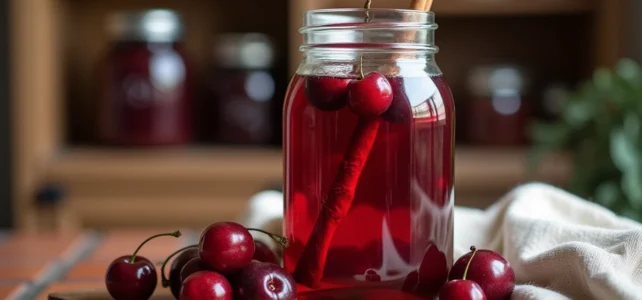
The fruit alcohol sold in supermarkets serves as a base for dozens of liqueur recipes, fruit brandies, and homemade macerations. However, the one offered by Leclerc in a 90° bottle raises concrete questions: variable availability depending on the stores, possible confusion with a non-food product in a neighboring aisle, and alternatives gaining ground. This article compares the available data to help make an informed choice.
Food-grade 90° alcohol and modified 90° alcohol: comparison table in Leclerc stores
The first trap lies within the store itself. Two bottles labeled “90°” can coexist in the same Leclerc, but their legal status is radically different.
Read also : Best Practices for Effective and Sustainable Management of Municipal Roads
| Criterion | 90° fruit alcohol (beverage aisle) | Modified 90° alcohol (household aisle) |
|---|---|---|
| Permitted use | Food maceration, homemade liqueurs | Cleaning, disinfection only |
| Denaturants | None (no camphor, no bitrex) | Camphor, bitrex or other denaturing agents |
| Key labeling | Label “food alcohol” or “for fruits” | Label “modified alcohol”, “not suitable for consumption” |
| Aisle in store | Alcoholic beverages | Household / cleaning |
| Common brand | Distributor or specialized brand | Primoplast or equivalent |
The confusion between these two products is documented. Only the labeling “food alcohol” guarantees use in maceration. Checking for the absence of denaturants on the ingredient list remains the minimum precaution before any purchase.
For those looking for detailed feedback, Leclerc fruit alcohol for maceration has consumer reviews that corroborate these observations on the readability of the labeling.
Recommended read : SIREN, SIRET and Sirene Directory: Understanding the Key Differences for Your Business
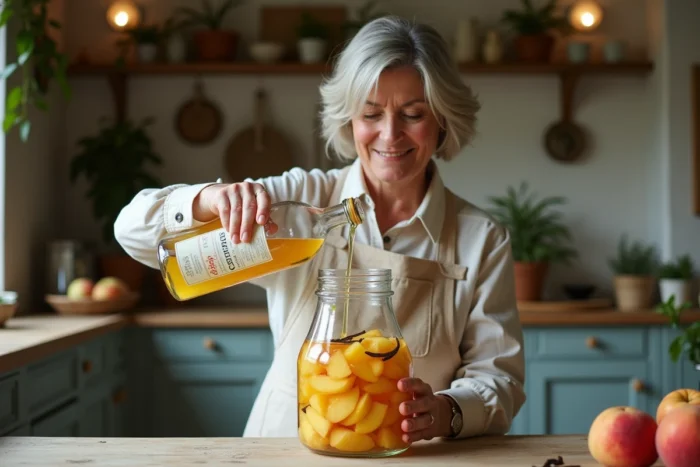
Availability of Leclerc fruit alcohol by region
One of the most common observations in forums and consumer feedback concerns the territorial disparity of in-store offerings. Several Leclerc hypermarkets have removed neutral 90° fruit alcohol from self-service, while others continue to offer it normally in the beverage aisle.
This situation creates real frustration for homemade liqueur enthusiasts. Finding the product may require checking online availability or calling the nearest store before making the trip.
Why some stores remove the product
Several factors explain this gradual removal. Large retailers tend to reduce references with low turnover in certain categories. Neutral 90° alcohol remains a niche product, purchased seasonally (summer for red fruits, autumn for quinces and plums).
The trend towards replacement with ready-to-use spirits like “45° fruit alcohol” also plays a role. These products, already diluted and flavored, offer a different profit margin and target a less knowledgeable audience.
90° fruit alcohol or 40° fruit brandy: what impact on maceration
The debate consistently arises in discussions among enthusiasts. Neutral 90° alcohol and 40° fruit brandy do not produce the same result in a jar at all.
- 90° alcohol extracts flavors and pigments from fruits more quickly. It then requires dilution with a sugar syrup to obtain a drinkable liqueur, allowing for precise dosing of the final alcohol content and sweetness.
- 40° fruit brandy brings its own aromatic profile (fruit, wood, terroir depending on origin). The result is rounder on the palate, but maceration takes longer to achieve complete extraction.
- Neutral 90° alcohol yields a more “technical” result: the fruit flavor dominates. A 40° fruit brandy produces a more complex result, where the character of the distillate blends with the fruit.
The choice thus depends on the desired outcome. For a raspberry liqueur where the fruit should take precedence, 90° is more suitable. For cherries in brandy with character, an alcohol already titrated around 40° to 45° adds an extra dimension.
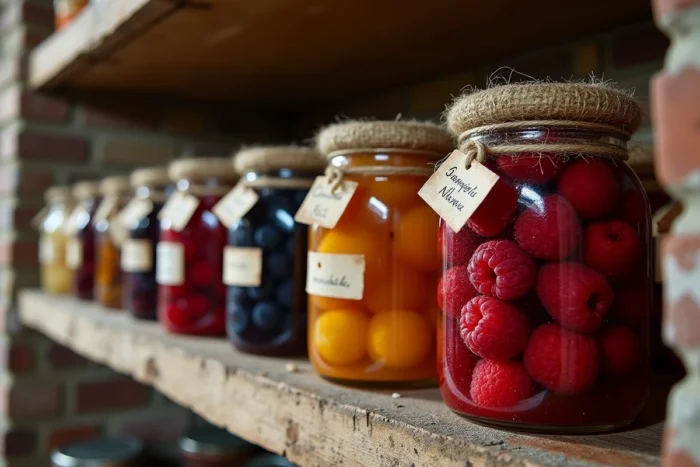
Checks before maceration: quality criteria for fruit alcohol
Regardless of the product chosen in-store, several points deserve particular attention before starting a maceration.
- Check for the mention “food alcohol” or “alcohol for fruits” on the label. The absence of this mention renders the product unsuitable for consumption.
- Ensure that the ingredient list does not mention any denaturants (camphor, bitrex, added methanol).
- Make sure the container is well-sealed and that the packaging date is legible. Neutral alcohol does not expire, but a poorly sealed bottle loses alcohol content through evaporation.
- Prefer storage away from light and heat after purchase, to preserve the aromatic neutrality of the product.
Sugar and alcohol dosing in a maceration jar
For a maceration based on 90° alcohol, the classic ratio is about one volume of fruit to one volume of alcohol, with sugar added to taste. The sugar dissolves gradually and helps balance the alcoholic strength.
With a 40° fruit brandy, the amount of sugar needed decreases, since the starting alcohol content is already lower. Patience remains the determining factor: a maceration of several weeks consistently yields better results than a jar opened too early.
The fruit alcohol sold at Leclerc fulfills its role as a neutral base for maceration, provided one clearly distinguishes the food product from its household counterpart. The uneven availability across stores increasingly drives enthusiasts towards ready-to-use spirits or artisanal distilleries offering fruit alcohols at intermediate strengths. Reading the label remains the only reliable guarantee before filling a jar.