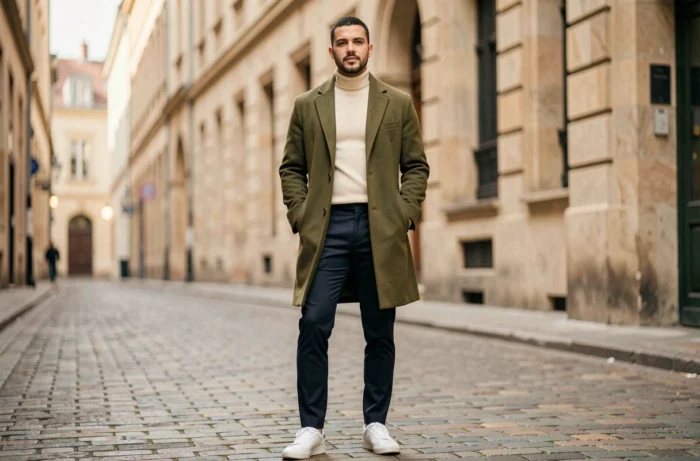
A well-cut white t-shirt, fitted raw jeans, a pair of understated sneakers: the men’s wardrobe today is built around simple pieces, worn with intention. Current men’s fashion is no longer just about following runway shows or accumulating clothing. It is based on thoughtful choices, where the quality of the fabric matters more than the visible logo.
Premiumization of Basics: Why Prices are Rising in Men’s Fashion
Have you noticed that the price of a simple t-shirt or a lightweight jacket has significantly increased in recent seasons? This is no coincidence. Data from the Retviews platform for the spring-summer 2026 season shows a marked growth in premium basics within men’s collections, with significant increases in volumes of t-shirts, denim, and outerwear.
Specifically, mass market and mid-market brands are adopting a strategy similar to that of luxury: raising the average price of each piece while betting on versatility. An intermediate-priced linen shirt replaces three low-end shirts that are discarded after two seasons.
This movement has a name in the industry: “conscious spending.” The idea is to buy fewer clothes, but of better quality, to keep them longer. To explore this topic in depth, Mr Seb’s fashion category regularly details selections of men’s pieces designed with this logic in mind.
A dense-weight t-shirt with a tailored cut lasts three times longer than a budget model. The economic calculation ultimately favors the premium basic, even if the entry price seems higher.
Fabrics and Cuts: What Men’s Trends Are Really Changing
Current trends are not limited to fleeting colors or silhouettes. They reflect a change in the relationship with men’s clothing, centered on two axes: natural materials and cuts that move with the body.
The Return of Linen, Heavy Cotton, and Plant-Based Leather
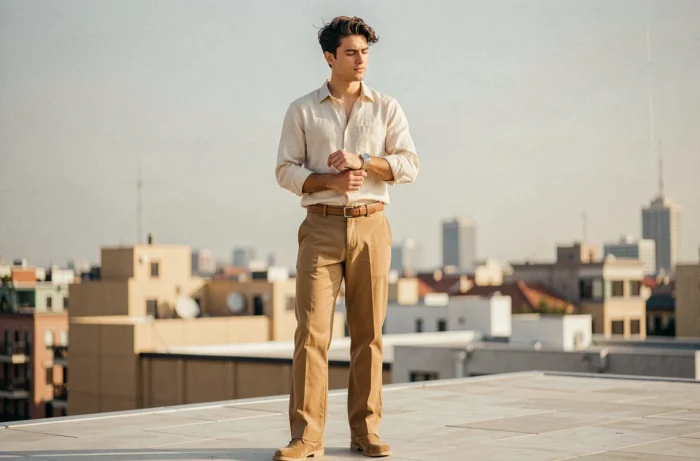
Linen is making a strong comeback in men’s shirts and trousers, including outside of summer. Heavy cotton (like oxford or twill) is becoming the standard for jackets and overshirts. As for leather, plant-based alternatives are gaining ground in accessories: belts, bags, small leather goods.
Why this shift? Because European regulations are pushing brands towards transparency. The European regulation on the eco-design of textiles, currently being rolled out, gradually requires manufacturers to justify the sustainability of their products. Brands are anticipating by reformulating their ranges.
Neither Slim Nor Oversized Cuts
The ultra-fitted slim cut of the 2010s has given way to more relaxed volumes, without falling into extreme oversized. The key term to remember: regular cut with calculated ease. The trousers fall straight, the shirt does not cling to the chest, and the jacket allows for a sweater underneath.
This approach facilitates layering, a styling technique that dominates fall and spring collections. A t-shirt under an overshirt, itself under a lightweight jacket: three simple pieces that create a structured look.
Textile Regulation in Europe: What is Changing for the Men’s Wardrobe
Competitors rarely talk about regulation when discussing trends. This is unfortunate because new European rules are concretely transforming the available offerings in stores.
- The European directive on environmental claims (Green Claims Directive) gradually prohibits vague terms like “eco-friendly” or “natural” without proof. Labels are becoming more precise, which helps to compare men’s clothing with each other.
- The ban on the destruction of unsold textiles, adopted by the European Union, forces brands to rethink their stocks. The result: more streamlined men’s collections, with fewer references but better calibrated.
- Extended producer responsibility (EPR) schemes require brands to finance the collection and recycling of their products at the end of their life. This financial constraint encourages the design of more durable clothing from the outset.
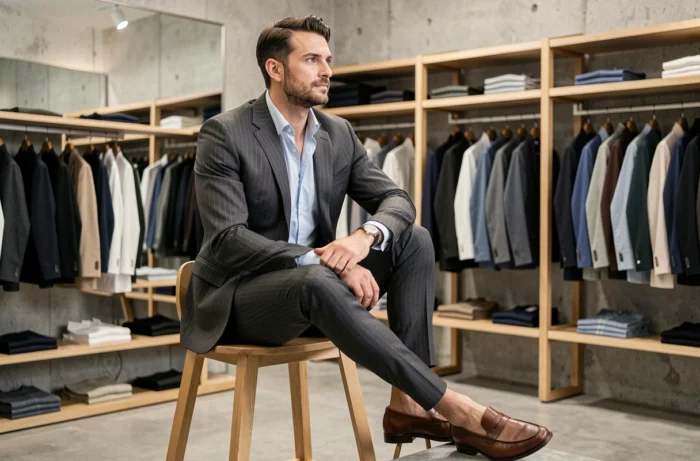
For consumers, these developments translate into rising prices in the mid-range, but also into better clarity of the offerings. A suit with a label detailing the exact composition, the origin of the fabric, and the manufacturing conditions: this is what these regulations are gradually making mandatory.
Men’s Accessories and Shoes: The Pieces That Make a Difference
The current trend values discreet but well-chosen accessories. Men’s bags are diversifying: the canvas tote bag now shares space with tanned leather pouches and crossbody fanny packs. One well-chosen accessory structures an entire outfit.
On the footwear side, minimalist sneakers (flat sole, solid color, no visible logo) dominate the market. Loafers and leather boots are returning to the wardrobes of those seeking an alternative to sneakers without tipping into formal wear.
Watches with thin dials, acetate-framed glasses, and bracelets made from natural materials complete the picture. The common thread of all these accessories: subtlety and quality of materials take precedence over brand visibility.
Building a Sustainable Men’s Style Without Following Every Micro-Trend
Micro-trends (a color, a pant cut, a type of collar) change every season. Underlying movements, however, settle in for several years. The premiumization of basics, the shift towards traceable materials, and comfortable cuts without excess are part of this second category.
Focusing on five to seven versatile pieces, prioritizing natural materials and regular cuts, allows one to navigate several seasons without having to buy an entirely new wardrobe. Current men’s style rewards consistency over reactivity to fleeting trends.