
The scalp has a high density of sweat glands. Under a hat, heat accumulates, air stagnates, and sweat appears within minutes. Sweating under a hat is not inevitable: the choice of materials, ventilation, and a few targeted accessories can radically change the comfort experienced.
The table below compares the main materials used in hat making, in terms of their ability to wick moisture and allow air circulation.
You may also like : Is it really possible to tan under a parasol? Tips and precautions to take
| Material | Breathability | Moisture Absorption | Drying |
|---|---|---|---|
| Natural straw | Very high (open weave) | Low | Fast |
| Cotton | Medium | High | Slow |
| Hemp | High | High | Medium |
| Technical nylon | Variable (depending on mesh) | Low | Very fast |
| Standard polyester | Low | Very low | Fast |
| Felt / thick wool | Very low | Medium | Very slow |
Several specialized sources detail anti-sweat hat tips on Le Blog de Lalie that corroborate this data on materials and add useful maintenance advice.
1. Opt for a straw hat with an open weave
Related reading : Practical tips to avoid a fake fine in Italy during your trip
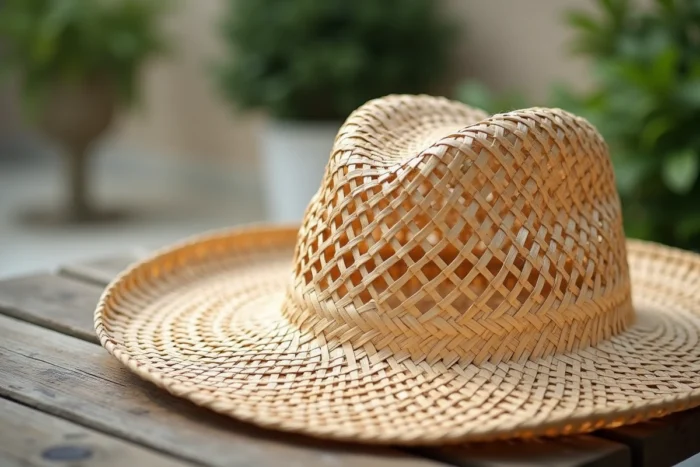
Woven straw allows air to pass between each strand. This natural weave creates passive ventilation that prevents heat from stagnating against the skull.
However, not all straw hats are created equal. A tightly woven model, often sold as “fine straw,” reduces air circulation almost as much as felt. Favor visibly open weaves, where light passes through the body of the hat.
The wide brim adds a secondary advantage: it casts a shadow on the face and shoulders, which reduces overall skin temperature and, consequently, sweat production.
2. Wear an absorbent headband between the forehead and the hat

Dermatologists specializing in contact acne recommend placing a thin cotton or technical material headband under the hat. This headband serves a triple purpose: it absorbs sweat before it runs down the face, creates a barrier between the skin and the hat fabric, and limits irritation and breakouts on the forehead.
The condition for this to work: change and wash the headband after each use. A reused headband over several days accumulates bacteria and sebum, worsening skin issues instead of resolving them.
3. Stick disposable anti-sweat pads in the inner band
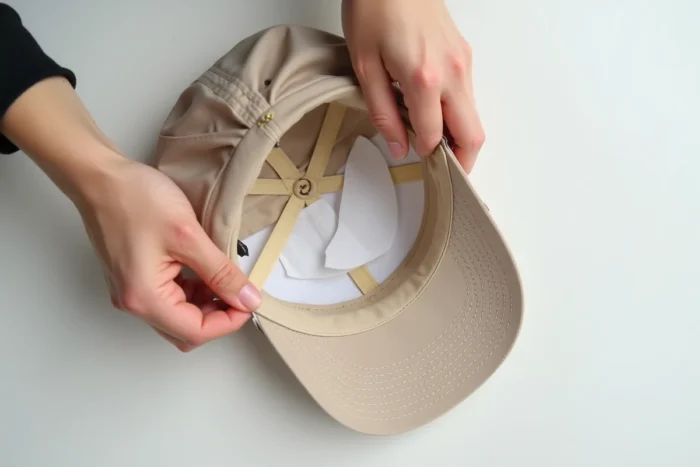
Recently, ultra-thin disposable sweat pads have been designed to stick directly inside the headband. Invisible once in place, they absorb moisture and protect the fabric from yellowish stains.
Protective adhesive strips, transparent or skin-colored, serve a similar function. They can be removed without damaging the inner fabric of the hat, making them suitable for daily wear in the city or at work, not just in sports contexts.
These accessories remain unknown, but they solve a concrete problem that neither material choice nor ventilation can completely eliminate.
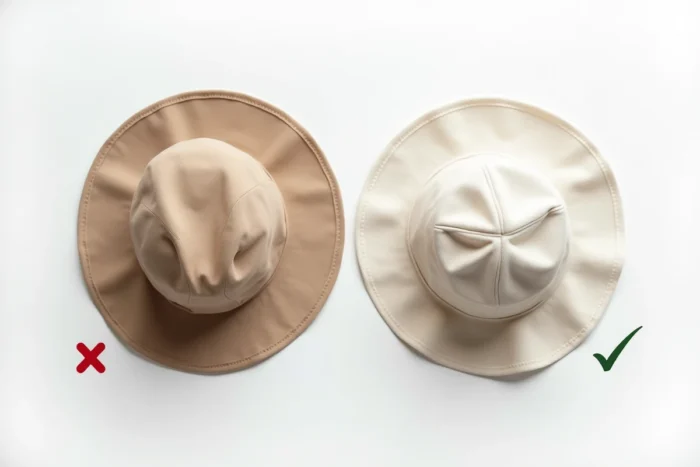
4. Choose light colors to limit heat absorption
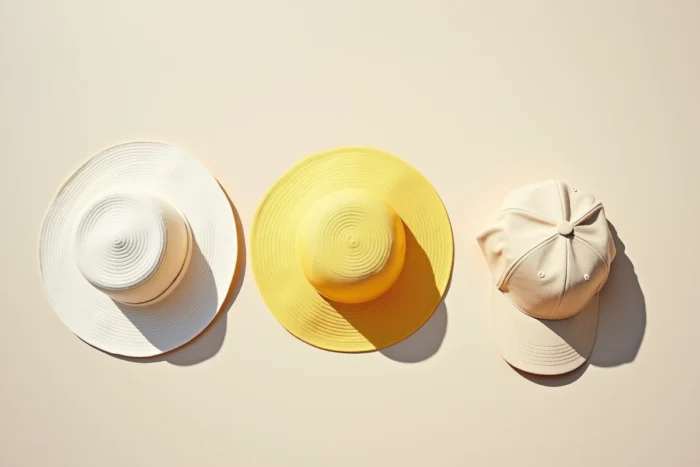
A dark hat absorbs more solar radiation than a light hat. The difference in perceived temperature under the headgear is significant: light colors reflect light instead of converting it into heat.
White, beige, ecru, pale yellow: these shades remain the most effective for summer use. Black and navy blue, despite their elegance, turn the hat into a thermal trap as soon as the sun shines directly on it.
5. Check for eyelets or ventilation perforations
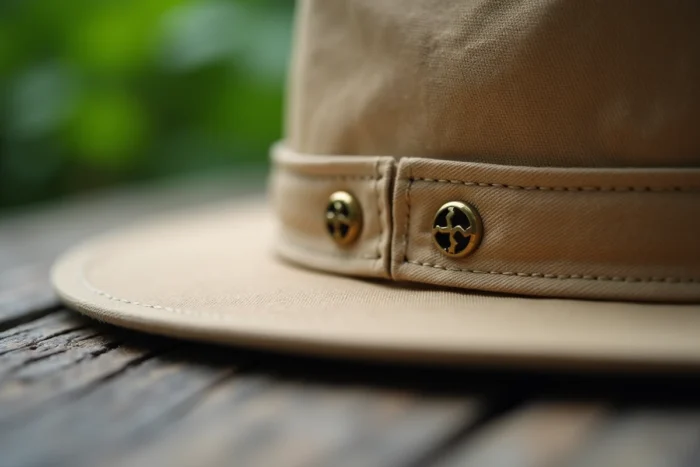
Some hats and caps incorporate eyelets or side perforations that allow warm air to escape from the top. This design detail changes the thermal dynamics under the hat: instead of a stagnant volume of air, a light current establishes itself from the bottom to the top.
In the absence of eyelets, you can briefly lift the hat every fifteen to twenty minutes to release accumulated heat. This simple gesture, often overlooked, is enough to break the heating cycle that triggers excessive sweating.
6. Avoid non-technical synthetic materials
Standard polyester and low-quality synthetics trap heat and hardly absorb moisture. Sweat remains on the surface, creating a sticky feeling and promoting bad odors.
In contrast, technical textiles designed for sports (mesh nylon, open-weave polyester) actively wick sweat outward. The difference lies in the structure of the fabric:
- A classic polyester has a flat, closed weave that retains heat like plastic wrap
- A technical open-weave nylon acts like a filter, allowing air to pass while maintaining its shape
- Cotton and hemp absorb sweat but dry more slowly, making them better suited for urban use than prolonged exertion
7. Slightly dampen the hat before going out
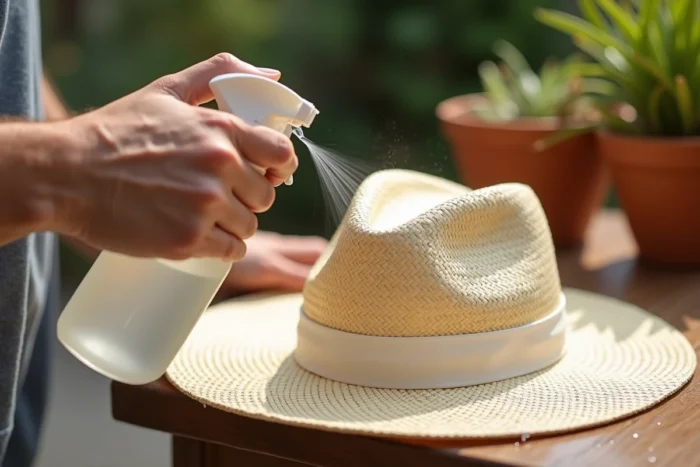
Lightly wetting a cotton or straw hat before wearing it exploits a simple physical principle: the evaporation of water absorbs heat and cools the surface. The same mechanism as a misting spray on the skin.
This technique works particularly well in dry weather, where evaporation is rapid. In humid weather, the effect diminishes as the water-saturated air slows the process. A few sprays from a travel misting bottle are sufficient, without soaking the hat to the point of distorting it.
8. Remove the hat regularly to ventilate the scalp

The most direct solution is also the most underestimated. Removing the hat for a few minutes in the shade allows the scalp to release accumulated heat and sweat to evaporate naturally.
Continuous wear for hours creates a localized greenhouse effect that even the best straw hat cannot fully compensate for. Alternating covered exposure and ventilated breaks keeps the skull temperature at a level where sweating remains moderate.
Combining several of these approaches yields the best results. A light straw hat with an open weave, paired with a daily washed absorbent headband and removed in the shade every twenty minutes, covers almost all summer situations without discomfort.