
The anti-inflammatory diet is gaining visibility in health media and recent scientific publications. Behind the label, it is not a restrictive diet but a logic of food choices aimed at reducing chronic low-grade inflammation, which sets in without visible symptoms and is associated with several long-term pathologies.
The data published in 2024 provide concrete insights into the measurable effects of this approach, including in clinical areas such as fibromyalgia or the risk of dementia.
What recent studies change in the understanding of the anti-inflammatory diet
Most articles on the subject compile lists of foods without specifying the level of evidence. The publications released in 2024 allow for a more rigorous framework.
A randomized controlled trial evaluated a personalized Mediterranean diet aimed at anti-inflammatory effects in female patients with fibromyalgia. The protocol combined vegetables, legumes, olive oil, fatty fish, and foods rich in polyphenols, with a reduction in added sugars and ultra-processed products. Result: a significant decrease in pain and an improvement in quality of life, independent of simple weight loss. This is a notable point, as it isolates the effect of the food composition itself.
A cohort study published in JAMA Network Open in 2024, based on the UK Biobank, followed more than 84,000 adults aged 60 and over with cardiometabolic diseases. Participants whose diet was classified as anti-inflammatory had a significantly lower risk of dementia, by about one-third, compared to those with a pro-inflammatory diet.
The authors emphasize the observational nature of this result: it is an association, not proof of causation.
As detailed in health advice on Pharmanco, translating these results into daily practice requires understanding which foods actually affect inflammatory markers, and how often.
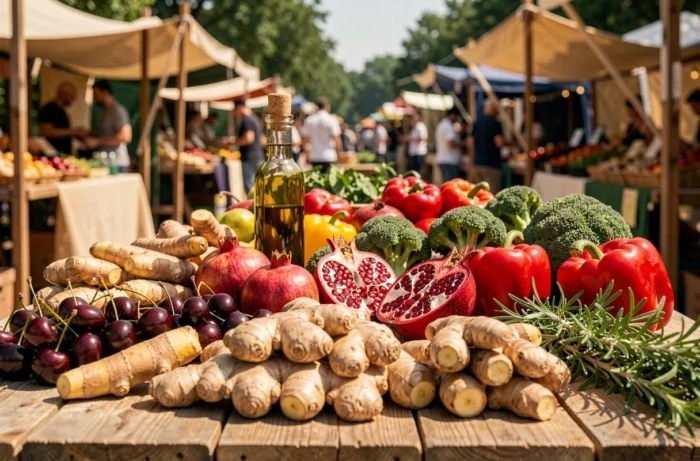
Omega-3, polyphenols, fibers: the three documented dietary levers
Rather than listing ten or fifteen foods, it is more useful to reason by mechanism. Three families of nutrients concentrate the bulk of the available evidence.
Omega-3 fatty acids and the omega-6/omega-3 ratio
Fatty fish (sardines, mackerel, herring, wild salmon) remain the most direct source of EPA and DHA, two fatty acids whose role in modulating pro-inflammatory cytokines is well documented. Walnuts, flaxseeds, and rapeseed oil provide ALA, a precursor whose conversion to EPA/DHA remains limited in humans.
The often-overlooked point concerns the omega-6/omega-3 ratio in the overall diet. Increasing omega-3s without reducing oils rich in omega-6 (sunflower, corn) and ultra-processed products that contain them in large amounts limits the expected anti-inflammatory effect.
Polyphenols: beyond turmeric
Turmeric receives disproportionate media attention compared to the available clinical data. The bioavailability of curcumin remains low without an adjuvant (piperine), and the effects measured in controlled trials are modest on blood inflammatory markers.
In contrast, red fruits, green tea, extra virgin olive oil, and unsweetened cocoa provide polyphenols whose absorption and action on the gut microbiota are better established. Extra virgin olive oil, in particular, contains oleocanthal, a compound whose anti-inflammatory mechanism has been compared to that of ibuprofen in in vitro studies.
Fibers and microbiota
Dietary fibers, derived from vegetables, legumes, and whole grains, nourish intestinal bacteria that produce short-chain fatty acids (notably butyrate). These metabolites help maintain the integrity of the intestinal barrier and reduce the passage of pro-inflammatory molecules into the bloodstream.
A regular intake of legumes (lentils, chickpeas, dried beans) combines this fiber effect with a supply of plant-based proteins and minerals, making it an often-underestimated pillar of the anti-inflammatory diet.
Pro-inflammatory foods: what fuels low-grade inflammation
Reducing foods that sustain chronic inflammation is at least as crucial as adding protective foods. The most documented categories include:
- Ultra-processed products (industrial ready meals, snacks, reconstituted meats) concentrate trans fats, refined sugars, and additives whose pro-inflammatory effect is measured by the increase of CRP (C-reactive protein) in several observational studies.
- Added sugars and sugary drinks promote insulin resistance, a metabolic condition that amplifies inflammatory cascades.
- Refined vegetable oils rich in omega-6, consumed in excess compared to omega-3, disrupt the balance between pro- and anti-inflammatory mediators.
- Alcohol, even in so-called moderate amounts, has a documented effect on intestinal permeability and the production of inflammatory hepatic cytokines.

Measurable effects in a few weeks: what short protocols show
An argument often raised against dietary changes is the delay before feeling a benefit. Recent data nuance this objection. Four-week protocols based on a plant-rich diet with plenty of vegetables, fruits, legumes, and whole grains have shown detectable changes in inflammation and biological aging markers over this short period.
These results do not mean that a month is enough to reverse chronic inflammation that has been established for years. However, they indicate that the body reacts quickly to changes in dietary composition, which can serve as a follow-up indicator.
No universal consumption threshold (number of fish servings per week, amount of olive oil per day) guarantees an anti-inflammatory effect in all individuals. The response varies according to each person’s microbiota, genetic background, and metabolic context.
What emerges from recent publications is the consistency of the overall pattern: more minimally processed plants, quality fats, and fewer industrial products steer biological markers in the right direction.