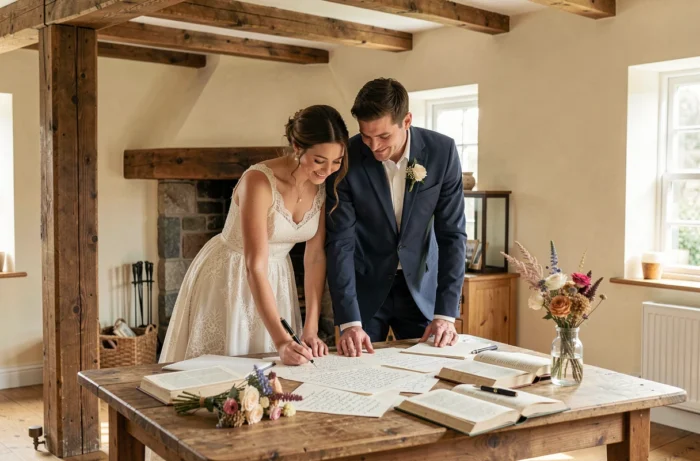
A love text for a wedding is based on three elements: a shared memory, a sincere emotion, and a promise directed towards the future. Very formal formulations have been declining in favor of simple, spontaneous, and personal words in recent years. Here are ten concrete techniques for writing vows or a speech that leave a lasting impression.
1. Anchor the text in a specific meeting anecdote
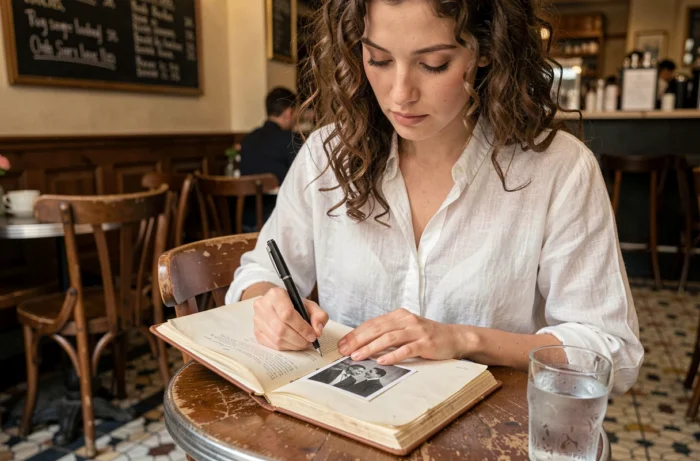
The lived detail distinguishes a generic text from a memorable one. Instead of writing “I loved you at first sight,” describe the scene: the place, the time, a visual or auditory detail. This snapshot narrative anchors the emotion in something concrete.
Couples who choose to write a beautiful love text for their wedding often start from this first scene to unfold the thread of their story. A specific anecdote touches more than an abstract declaration.
2. Use the handwritten letter structure for ceremony vows
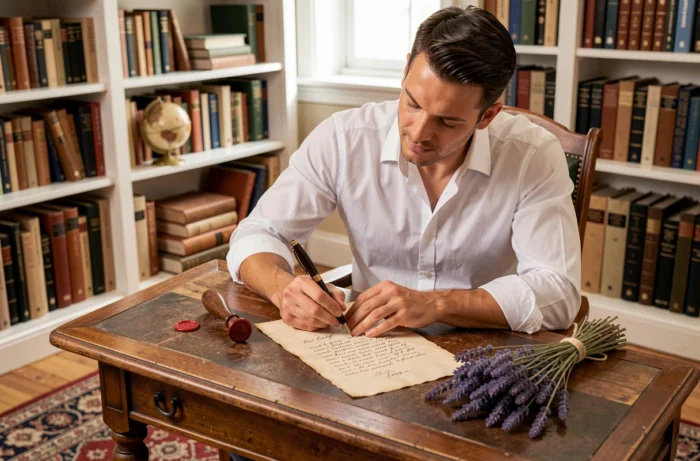
Writing your vows in the form of a letter addressed directly to the other (“My love, that morning…”) creates immediate intimacy. This format works particularly well in micro-weddings with a small guest list, where a conversational tone replaces the solemn speech.
Slip the letter into the pocket of the jacket or on the dresser to be discovered before the ceremony. The epistolary format naturally imposes sincerity because you are addressing only one person, not an assembly.
3. Integrate a concrete promise rather than a vague commitment
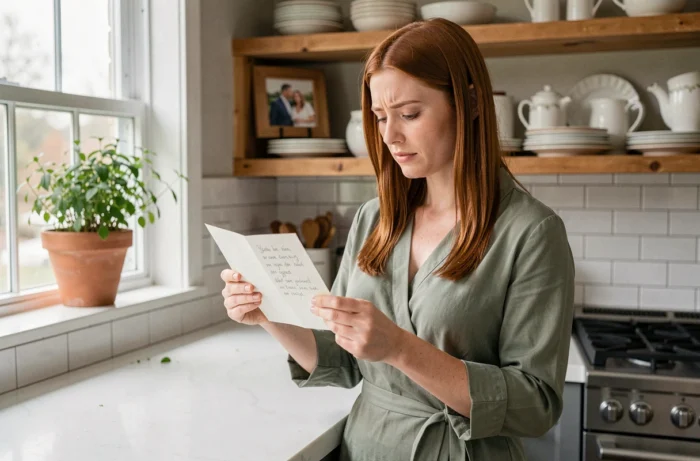
“I promise to always save you a spot on the couch” carries more weight than “I promise to love you for eternity.” Promises rooted in daily life evoke both laughter and emotion because they show that you know the other in their habits.
Write three promises: one tender, one funny, one directed towards a shared project. This triptych gives rhythm to the text and avoids sentimental monotony.
4. Borrow an excerpt from a poem or song as a common thread
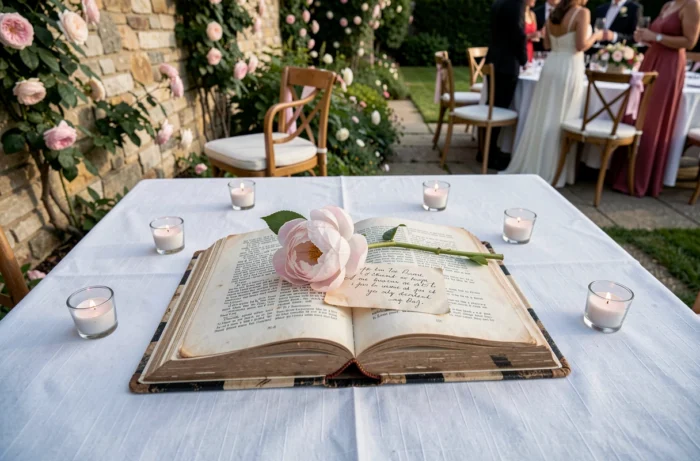
Citing a few lines from a poem that matters to your couple gives a backbone to the text. The quote serves as a starting point, not a crutch: frame it with your own words so that it integrates into your story.
A line from Rosemonde Gérard, a passage from a song heard during a trip, an excerpt from a movie watched together: the choice reveals your complicity. Limit the quote to two or three lines so that your voice remains dominant.
5. Alternate humor and emotion in the wedding speech
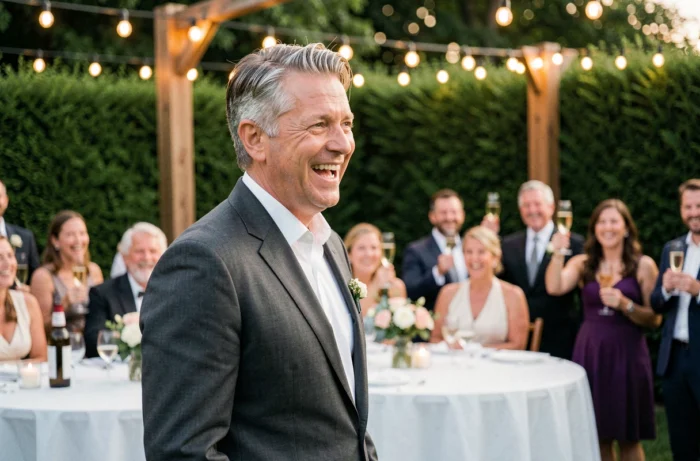
A text that contains only raw emotion tires the audience. A text that is only funny lacks depth. The alternation between laughter and feelings creates a rhythm that guests remember.
Place a note of humor after an intense passage to relieve the tension. For example, after mentioning a difficult moment you went through together, slip in a light remark about a quirk of the other. This contrast makes both registers more powerful.
6. Write a short text for the vows: three minutes maximum when spoken
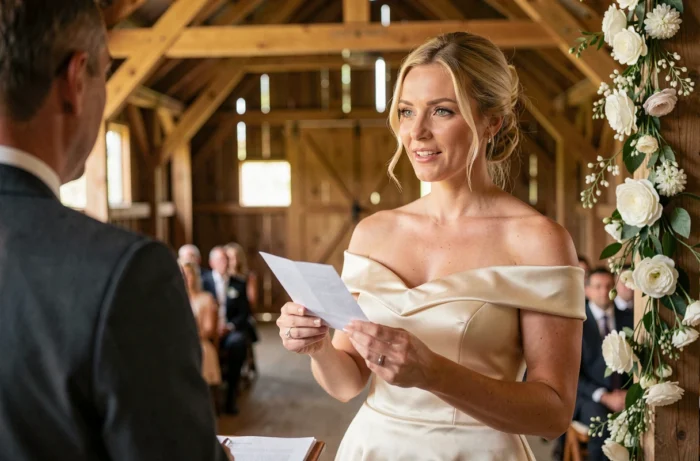
The most impactful vows rarely exceed three minutes of reading. Beyond that, guests’ attention wanes and the emotion dilutes. Aim for a text that fits on one handwritten page front.
Read aloud and time yourself. If you exceed, cut passages that describe general feelings (“you are the most extraordinary person”) and keep the lived scenes. Density takes precedence over length.
7. Personalize the invitation with a love message that sets the tone
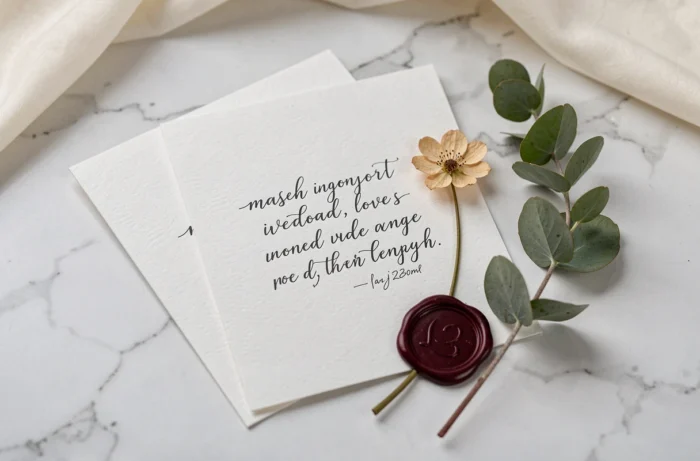
The text of the invitation is the first contact your guests have with the atmosphere of the wedding. Replace the classic formula with a phrase that tells something about you:
- A key date followed by a phrase explaining what it represents for both of you
- A humorous word that reflects your couple dynamic
- A common quote followed by your invitation, in a simple and direct style
This text sets the tone: guests will know if the ceremony will be solemn, relaxed, or poetic.
8. Engrave a short word on the wedding rings or a ceremony jewelry
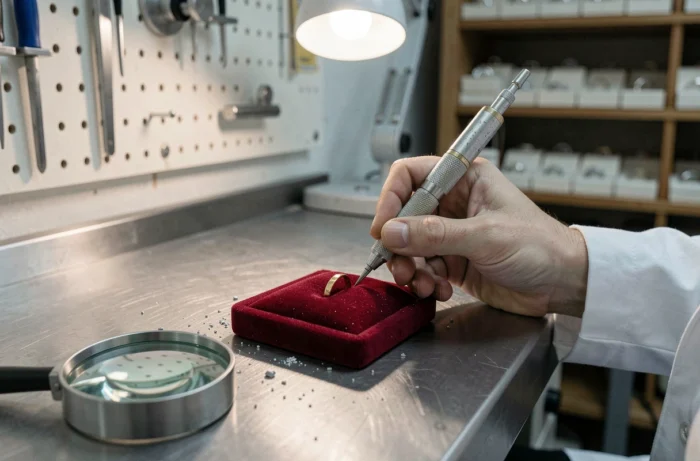
Engraving on a wedding ring imposes a format constraint that forces you to find the right word in a few characters. A date, a nickname, an infinitive verb (“come back,” “stay,” “dare”): brevity transforms an ordinary word into an intimate symbol.
Some couples also choose to engrave a word on a luggage tag for the honeymoon, extending the love text beyond the ceremony. The medium matters as much as the words.
9. Write a dual-voice memory book for the secular ceremony

Each person writes five significant memories of the couple, without consulting each other. On the day of the secular ceremony, the two lists are read alternately. The overlaps provoke emotion, the differences trigger laughter.
This dual-voice format avoids the monologue and transforms the vows into a dialogue in front of the guests. The master of ceremonies can connect the memories with short transitions to smooth the reading.
10. Address an individual letter to each close guest in a micro-wedding
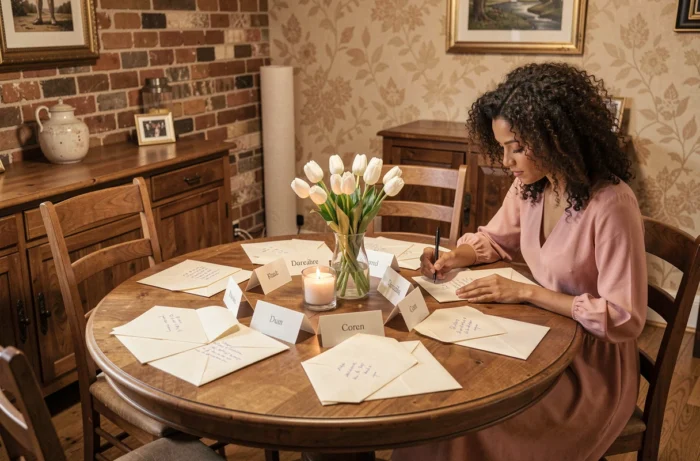
In very small weddings, some couples write a short personal note for each guest, slipped under the plate or in the guestbook. This practice extends the love text beyond the couple and acknowledges each person’s role in the story.
A few lines are enough: a shared memory with that person, a specific thank you, a humorous remark. Each guest leaves with a text meant for them, which anchors the memory of the wedding much more than a collective speech.
The common thread in these ten approaches remains the sincerity of the message and the choice of a lived detail rather than a ready-made formula. A love text for a wedding does not need to be long or literary: it must sound true when read aloud, in front of the person to whom it is intended.