
You are driving calmly in the center of Siena, the GPS indicates “straight ahead.” Two weeks later, a letter arrives at your home with a fine for unauthorized entry into a limited traffic zone. The problem: you never saw a clear sign, and you even doubt the legitimacy of this letter.
This scenario affects many French tourists in Italy every year. The line between a real fine and a scam by mail is not always easy to draw.
Further reading : How to Start in the Stock Market: Practical Tips and Strategies for Effective Investing
GPS, ambiguous signs, and ZTL: when the infraction hits you unexpectedly
ZTLs (Zona a Traffico Limitato) are urban areas where traffic is restricted, often monitored by automatic cameras. The most common trap does not come from driver negligence, but from a GPS that maps a route through an active ZTL.
Google Maps and most navigation apps do not yet reliably signal Italian ZTLs. Your device can therefore guide you straight into a prohibited area, while the entry sign is small, partially obscured by vegetation, or written only in Italian with complex timings.
You may also like : How to Avoid Sweating Under a Hat: 8 Tips to Stay Dry
What complicates the situation: restrictions are not only during the day. In several cities, some ZTLs are active in the evening and on weekends, which surprises travelers who think these zones only operate during business hours. In Rome, Florence, or Turin, the time slots vary from one neighborhood to another, sometimes from one street to another.
If you receive a notice several weeks after your trip, the first question to ask yourself is simple: is this fine legitimate or fraudulent? To learn how to avoid a fake fine in Italy, you first need to understand what a real Italian fine looks like and what elements to check on the received letter.

Recognizing a real Italian fine from a fraudulent letter
A legitimate Italian fine always mentions the issuing municipality, the vehicle’s license plate number, the exact date and time of the infraction, as well as a photo or a reference to the camera recording. It arrives by registered mail, not by email or SMS.
Scams, on the other hand, share several identifiable characteristics:
- The sender’s address does not correspond to any verifiable Italian municipal administration.
- The letter requests payment to an IBAN that does not correspond to a public Italian account (municipal accounts generally start with an identifiable bank code).
- No specific reference to a report number (verbale) or a camera snapshot that can be consulted online.
- The amount requested is round, without details of the legal basis or mention of a reduced payment deadline.
A real Italian fine always offers a discount for quick payment. If the letter does not mention any reduction related to the deadline, it is a strong warning signal. Legitimate fines indicate a reduced amount if paid within a certain number of days after receipt, and an increased amount thereafter.
Challenging a ZTL fine received from abroad: evidence and recourse
You have checked, the fine seems authentic, but you are convinced that the infraction results from an unreadable sign or misleading GPS indication. Contestation is possible, even from France, provided you build a solid case.
Evidence to gather during your stay
The most useful reflex is to systematically photograph the ZTL signs you encounter, especially if their readability seems doubtful. Also take a screenshot of your GPS route at the moment you cross an uncertain area.
These visual elements serve to demonstrate that the signage was not compliant or not visible. Italian legislation requires that ZTL signs be clearly positioned before entering the zone. A sign that is obscured, turned, or lacking translation may constitute grounds for appeal.
The contestation procedure from France
The appeal is addressed either to the prefect of the concerned Italian province or to the justice of the peace (Giudice di Pace) of the municipality. You can send your contestation by registered mail with acknowledgment of receipt. The deadline for contesting runs from the date of receipt of the notice, not from the date of the infraction.
Your appeal letter must contain:
- A copy of the received fine with the report number.
- Your photos or screenshots showing the ambiguous sign or GPS route.
- A factual explanation (not emotional) of the situation, ideally translated into Italian.
- Proof that your accommodation confirmed the registration of your plate, if applicable.
Keep all correspondence with your hotel regarding the ZTL. If the establishment was supposed to register your plate with the municipality and did not do so, liability may be shared. A simple email exchange proving your prior request constitutes useful evidence.
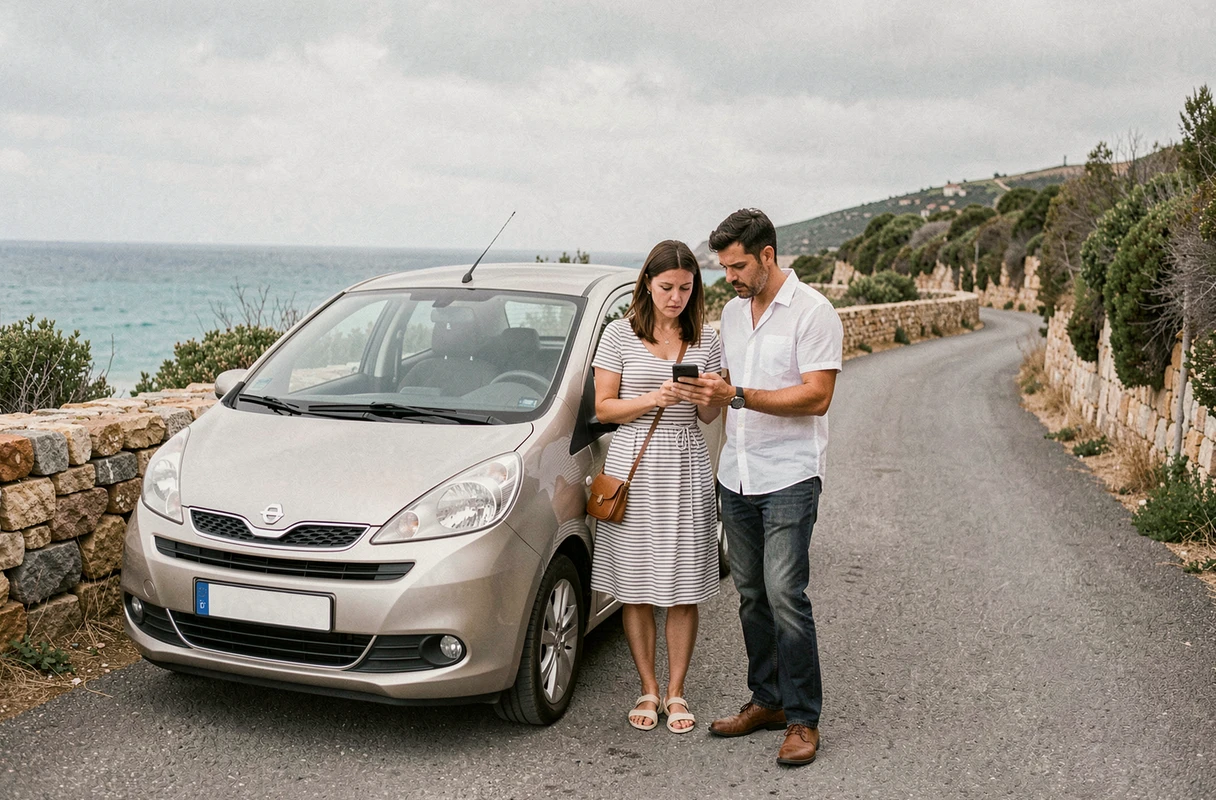
Hotel in ZTL and rental vehicle: two cases that multiply the traps
Booking accommodation located in a ZTL does not automatically grant the right to drive there. The hotel must register your license plate with the municipal police before your arrival. Request written confirmation of this registration, not just a simple “yes” over the phone.
Without this record, you have no proof in case of a camera ticketing. The camera records your passage, and if your plate is not in the authorized database at the exact moment of crossing, the fine is automatically issued.
For rental vehicles, the risk is double. The rental company receives the fine, charges it back to the driver with management fees, and the transmission delay significantly extends the time before you are informed. At this point, the discount for quick payment is often exceeded.
The most reliable strategy for motorhomes and rental cars remains to systematically park outside the ZTL and reach the center on foot or by public transport. Most Italian cities have park-and-ride facilities in close proximity to restricted areas.
Before driving in Italy, consult the ZTL maps available online for the cities on your itinerary. Each municipality manages its own perimeters and schedules. This check takes a few minutes and can save you months of contestation procedures from France.